Kailo YPAG: What young people want employers to know about meaningful youth employment
Kailo is an initiative which aims to help local communities, young people and public services better understand and address the social contexts which can impact young people's mental health.
In North Devon, Kailo has been focussing on improving diverse opportunities for employment for young people. As part of the Kailo evaluation, the research team are exploring what it looks like when employment opportunities systemically improve for young people, including how to build young people’s participation into changing the employment system.
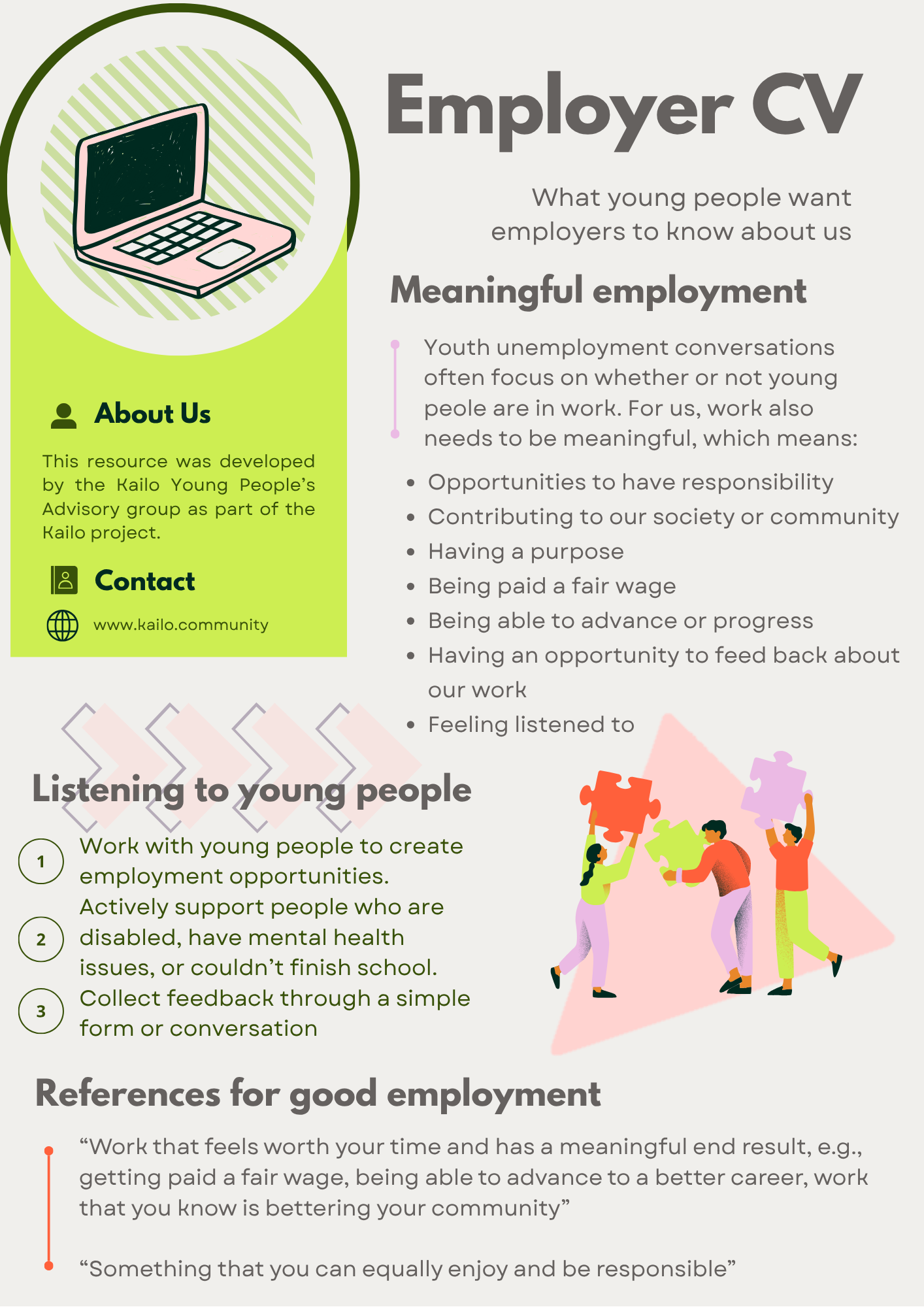
CORC are working with a group of eight young people in Devon to understand their views on ‘meaningful’ employment and how young people’s participation can influence change in their communities. The YPAG produced a poster to summarise their thoughts below.
One of our YPAG members, Jasmine aged 16, shares her thoughts on youth employment:
What is ‘meaningful’ employment?
For me, meaningful employment isn’t just about getting paid a fair amount for your work. As someone who works two jobs, I find that the most meaningful one is not the one where I get paid more, but the one where I am learning most. It needs to be respected that many young people are entering the world of employment for the first time with little experience. True worthwhile employment isn’t just about finding value in a job, but it’s also about your adult colleagues seeing value in you.
In our group, we discussed how meaningful employment should be a balance between enjoyment and responsibility. While it is important that a young person enjoys their day-to-day work, it is equally important that they are given responsibility and trusted by their co-workers. Independence can be achieved through frequent training sessions and patient support from managers. This gives young people the opportunity to learn the vital skills they need to move forward in their employment. From training in customer interactions to soft skills such as teamwork, these assets will stay with a young person for life.
There are many factors involved when considering how ‘meaningful’ employment is for young people. For example, if a job is meaningful, you would expect a young person to stay in the job for a longer time. Therefore, one way forward may be looking at how long a young person intends to stay in their job as a measure of how inspired they feel by their local opportunities. Answers to questions like this could be gathered from schools, interviews or anonymous questionnaires simply worded to be accessible to all.
Questions could include:
What makes work meaningful? Would you call your current job meaningful?
Would you recommend your job to someone else?
What is making you stay in your job? How much do you enjoy your everyday work?
What is the first thing that comes to mind when you think of employment?
How can young people impact change in their community?
For too long, youth standing for change has been surrounded by stigma. We as young people are often assumed to be too inexperienced and immature to make decisions, yet if we are ever to become more involved in our communities, this cannot continue.
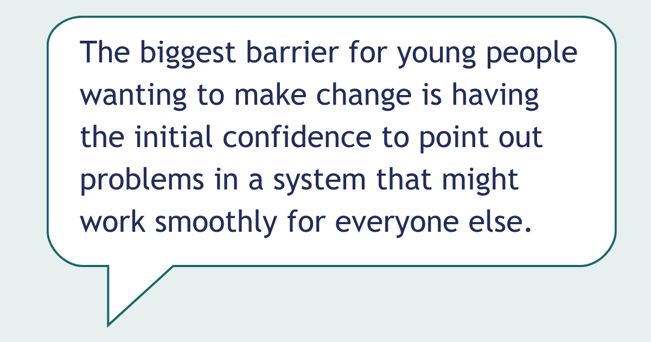
The biggest barrier for young people wanting to make change is having the initial confidence to point out problems in a system that might work smoothly for everyone else. This is why instead of having to advocate for change alone, we should find peers with the same views and present solutions together. Through doing this, young people can share ideas, stand up for each other and feel more determined. The more voices, the bigger the movement and the greater the chance of making a difference.
If reform in the employment sector and elsewhere is ever to happen, we need to have access to the right platforms to put forward our ideas. It is otherwise almost impossible for challenges to be resolved without knowing who we need to talk to. Whether it is young people being more involved in local meetings, workplace appraisals measuring employee satisfaction or easier online methods for reporting issues in the community: progress does not have to start large.
This poster has been designed by YPAG member Alyssa, which you can download here.
To find out more about Kailo, visit: Kailo - The shape of mental health to come